Random
About This Space


This section of ChristopherMichaud.ca is called Anything Goes.
Music. Culture. Politics. Technology. Business. Ideas. Sometimes history. Sometimes the odd story that just catches my attention and won’t let go.
If something interesting is happening in those spaces, you’ll probably see it here.
The format is intentionally simple. Short news posts. Longer analysis pieces. Occasionally a deeper look at something that deserves more context than the typical headline-driven news cycle allows.
In other words, it’s structured like a newspaper but filtered through one person’s interests.
That’s the whole idea.
Most modern news platforms are built around chasing clicks, feeding algorithms, and publishing dozens of stories a day whether they matter or not. The result is a constant stream of noise that often leaves readers feeling less informed than when they started.
This is meant to be different.
The stories here are the ones that caught my attention enough to sit down and write about them. Sometimes they’re big stories. Sometimes they’re niche topics that only a certain group of readers will care about.
That’s fine.
If your interests overlap with mine, you’ll probably find something here you enjoy.
You might see coverage of major Canadian political developments one day, a deep dive into the legacy of Van Halen the next, and a piece about technology or economics after that. The range is wide because the curiosity behind it is wide.
This section exists because I’ve always liked the structure of a newspaper. There’s something timeless about the idea of turning the page and discovering a story you didn’t know you wanted to read.
So that’s what this is.
A modern version of a newspaper, built around curiosity instead of algorithms.
And if you’re here reading it, chances are we probably find the same things interesting.
Welcome.


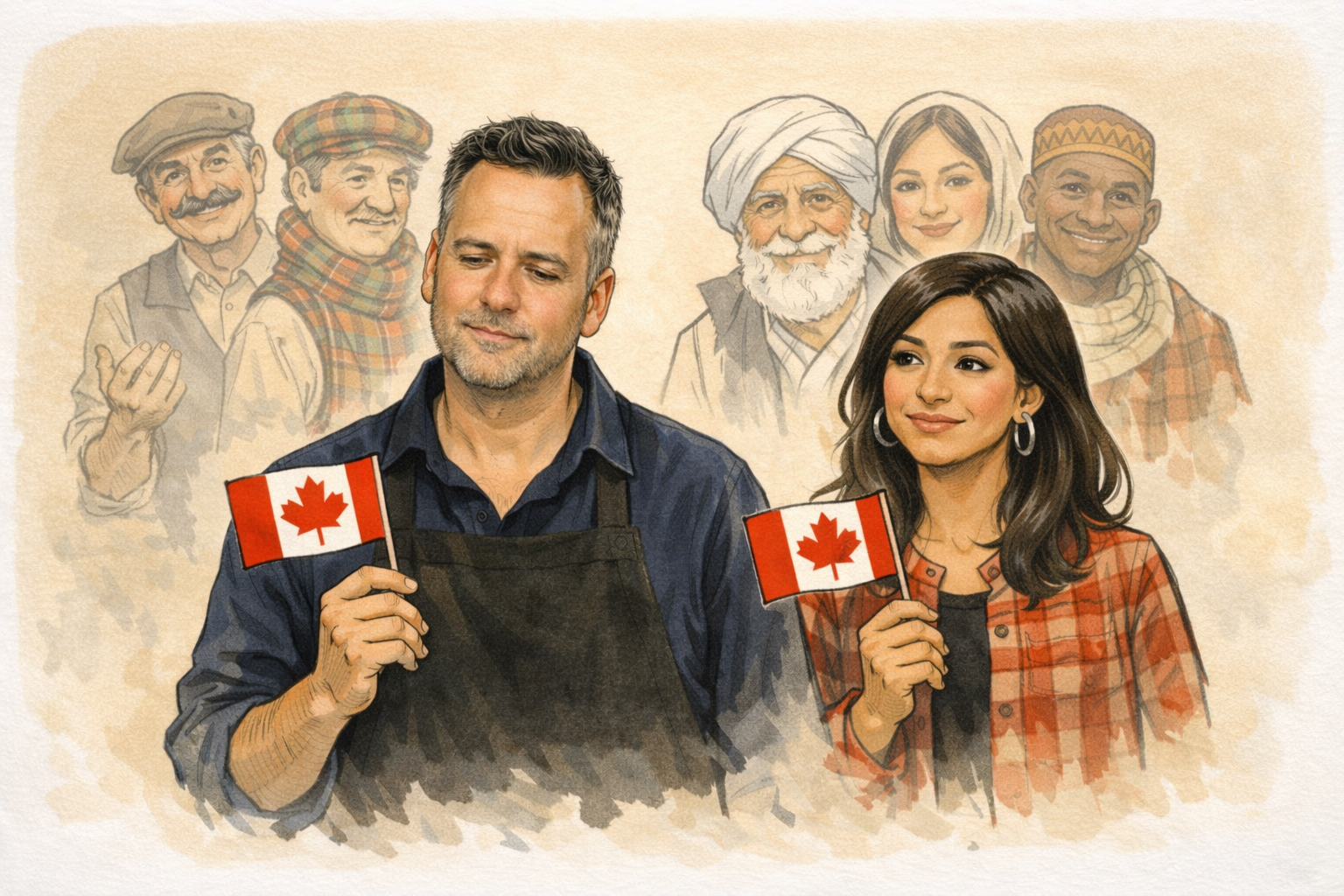
It’s a funny question when you think about it.
What am I?
People ask it in Canada all the time, sometimes directly, sometimes in a roundabout way.
“Where are you from?”
“What’s your background?”
“What nationality are you?”
And most of the time, the answer you hear isn’t Canadian.
It’s Italian.
Scottish.
Irish.
Greek.
Portuguese.
Ukrainian.
Chinese.
Indian.
Ask enough Canadians and you’ll hear every corner of the world.
In my case, the answer depends on which branch of the family tree you’re looking at.
On my mother’s side, there’s Italian heritage. That’s where the Marzitelli name comes from. Like a lot of Italian families in Canada, that history goes back generations now. People came here, worked, raised families, built lives.
On my father’s side, the roots are Scottish and Quebecois, which is really its own cultural lineage inside Canada.
Advertisement
So if someone asked me what I “am,” I could give them a long answer. I could talk about Europe. I could talk about ancestry, migration, family names, and cultural roots.
But here’s the thing.
I wasn’t born in Italy.
I wasn’t born in Scotland.
I was born in Canada.
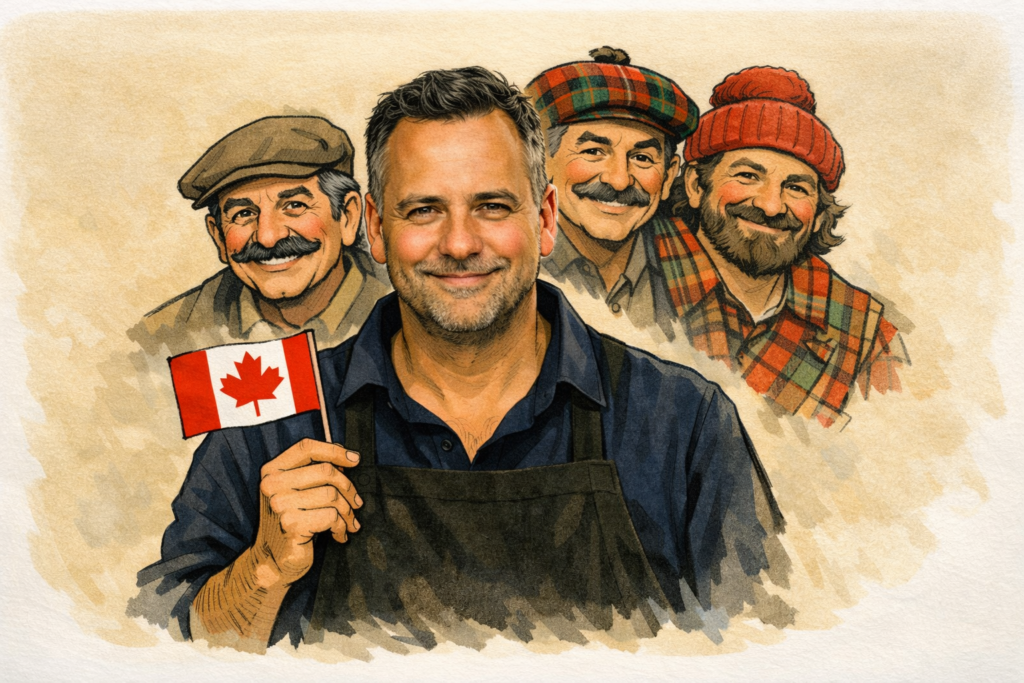
I grew up in Montreal. I’ve lived in different parts of this country. My life, my experiences, my work, my culture, my reference points, they’re all Canadian.
Yet in Canada, we have this strange habit.
When someone asks where we’re from, we often reach for the old country instead of the one we’re actually standing in.
A third-generation Canadian whose grandparents came from Italy might say, “I’m Italian.”
Someone whose family left Ireland a hundred years ago might say, “I’m Irish.”
And in a way, that’s understandable. Those stories matter. They’re part of family history. They’re part of how communities formed in this country.
Canada is one of the most diverse societies on earth. That diversity is real, and it’s something worth celebrating.
Advertisement
But there’s another side to it.
Sometimes it feels like we’re so focused on where our families came from that we forget to say where we actually are.
Canadian.
Part of this may come from the way Canada and the United States were formed.
And to be clear, this isn’t about saying one country is better than the other. It’s simply about understanding how two neighbouring societies developed in very different ways.
The United States was born out of a revolution. It was founded around a set of ideas, liberty, independence, and self-government. Those ideas became part of the country’s national myth. Americans grow up inside that story.
Even today, when American politics is deeply divided, that underlying identity still exists. If foreign boots ever landed on their shores, those divisions would likely disappear very quickly. In that moment, they would simply become Americans standing side by side.
Canada’s story unfolded very differently.
From the very beginning, this country was built through negotiation rather than revolution.
The early French settlers negotiated relationships with Indigenous peoples. Later, the British took control but had to negotiate with the French population that remained. Confederation itself was a negotiation between provinces, languages, cultures, and regions.
Advertisement
And that pattern never really stopped.
Canada has always been a country held together through compromise. Through agreements. Through gradual adjustments rather than dramatic breaks.
In many ways, that’s one of our strengths. It’s part of why Canada developed into a relatively stable and peaceful society. Our instinct has usually been to negotiate rather than to fight.
But that history also shaped our national identity.
Because we weren’t built around a single revolutionary story or founding myth, the sense of a single, unified national identity has always been a little softer here.
Instead, we often lean more heavily on our regional identities, or our cultural backgrounds.
Italian.
Scottish.
Chinese.
Punjabi.
Ukrainian.
Quebecois.
Multiculturalism has brought extraordinary richness to Canada. Our food, our music, our languages, our communities, all of it reflects that diversity.
But multiculturalism by itself doesn’t fully answer the question of what ties all of us together.
That’s why the idea of Canadianism matters.
Advertisement
Not as a rejection of multiculturalism, but as the next step beyond it.
Multiculturalism celebrates the many threads that make up this country. Canadianism is about weaving those threads into something shared.
A common civic identity.
A sense that whatever our backgrounds may be, whatever languages our grandparents spoke, whatever traditions our families carried here, we are part of the same national story.
Italian heritage.
Scottish roots.
Quebecois culture.
Those things are part of who I am.
But they all sit inside something larger.
Canadian.
And maybe the next step in our national conversation is learning to say that first, not as a replacement for our diversity, but as the thread that connects it all.



Chuck Norris, 86, Dies. Yes, Really.

The Ultimate Guide to Canadianism: How the Five Pillars Can Rebuild Our Shared National Home

Quebec Saves the Music Industry


-
 Music1 month ago
Quebec Saves the Music Industry
-

 Food1 month ago
The chicken marsala.
-
 Uncategorized1 month ago
The Ultimate Guide to Canadianism: How the Five Pillars Can Rebuild Our Shared National Home
-

 Music2 months ago
My Experience With Suno and AI Music
-

 Music2 months ago
Alex Van Halen Working on New Album Built From Eddie Van Halen’s Unreleased Recordings
-
 Random2 months ago
What Am I?
-

 Food1 month ago
Nina and Ella’s Family Cheesecake
-

 Music2 months ago
Bruno Mars Returns: ‘The Romantic’ Debuts at No. 1