
Uncategorized
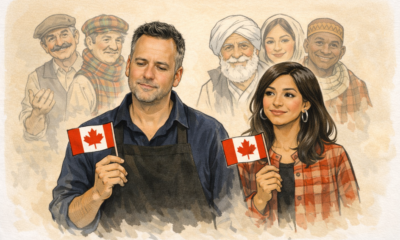
The Ultimate Guide to Canadianism: How the Five Pillars Can Rebuild Our Shared National Home


I’ve spent a good chunk of my life on the road, looking out of windshields at the vast, changing landscape of this country. If you’ve ever driven across the Prairies at sunset or watched the fog roll into a coastal harbor, you know that Canada isn't just a place on a map: it’s a feeling. But lately, talking to folks from St. John’s to Victoria, I’ve noticed that feeling is getting a bit frayed at the edges.
We’re living through a time where "starting over" isn't just a catchy phrase for a self-help book; it’s a reality for a lot of us. Whether you’re rebuilding a career after a layoff, trying to get a new business off the ground, or just trying to figure out how to navigate a world that feels increasingly divided, the ground under our feet feels a little less solid than it used to.
In my own journey: from the highs of business to the literal "what now?" moments: I’ve realized that we need a framework. Not a political manifesto, but a personal one. Something grounded in the real-life lessons we learn when we’re building things from scratch. That’s where the Five Pillars of Canadianism come in. They aren't just abstract ideas; they are the tools we can use to rebuild our shared national home, one brick at a time.
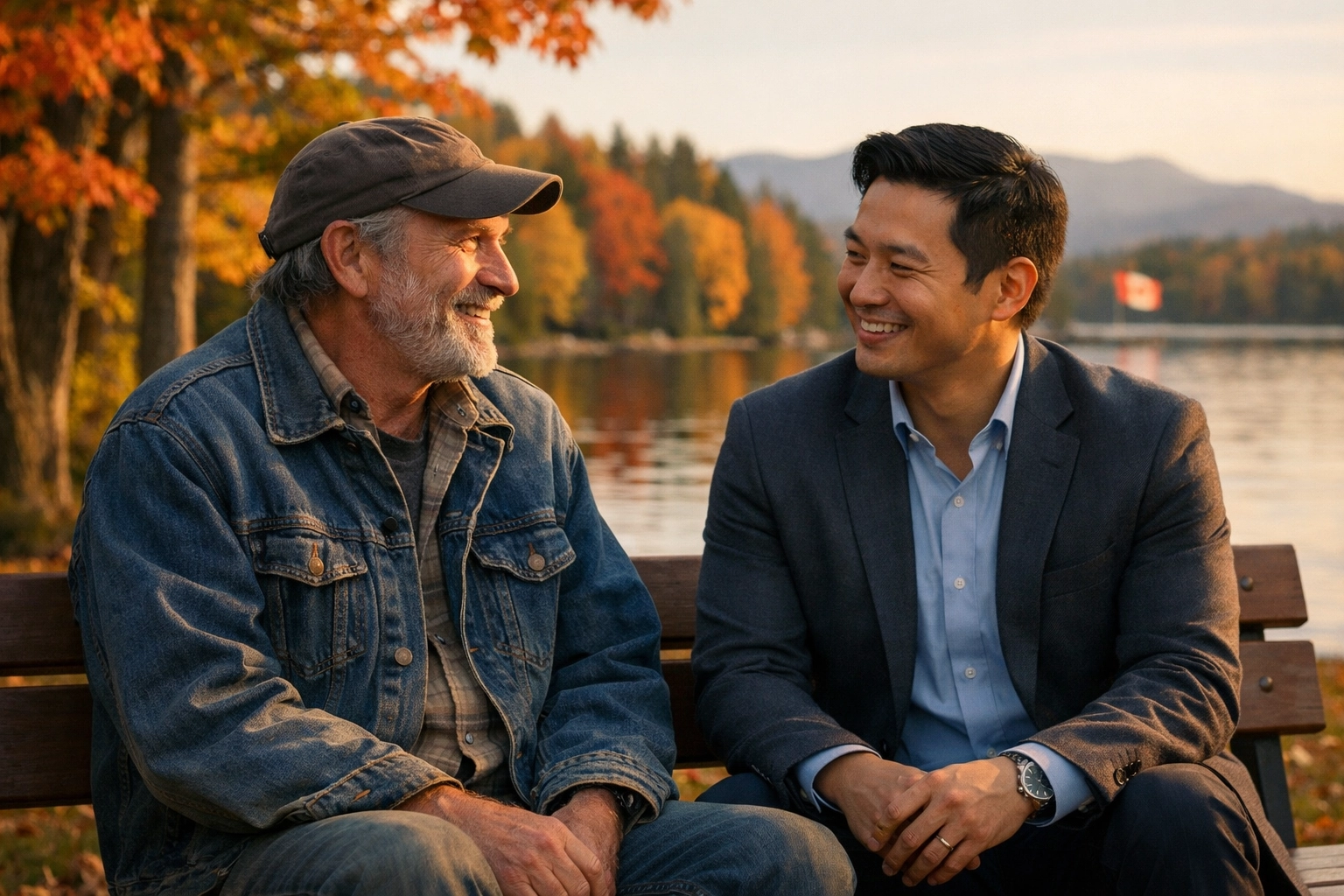
1. Respect: The Cornerstone of the Hustle
When I look back at some of my wildest stories, like the night we stole my own store, I’m reminded that at the heart of every interaction is a basic need for respect. In business, and especially in Public Relations, respect isn't just about being "nice." It’s about acknowledging the inherent dignity and the rights of the person sitting across from you, even if you’re currently arguing over a contract or a vision for a project.
Respect is the cornerstone of the Canadian identity because it’s what allows us to have a multicultural society that actually works. It’s the "live and let live" attitude that lets a tech startup founder in Toronto and a farmer in Saskatchewan both feel like they belong to the same project.
In your personal life, rebuilding with respect means respecting your own journey: even the messy parts. If you’re starting over at 40 or 50, respect the experience you’ve gained, and respect the people who are helping you get back on your feet. Without respect, any house we build: national or personal: is built on sand.
2. Responsibility: Owning the Outcome
There’s a certain weight that comes with being an owner. Whether you own a small PR firm, a retail shop, or just the responsibility for your family’s future, you quickly learn that the buck stops with you.
In my book, The Case for Canadianism, I talk about how responsibility is a shared obligation. It’s not just about paying your taxes; it’s about active participation. It’s about looking at a problem in your community and saying, "What can I do to help fix this?" rather than waiting for a memo from someone in an office three provinces away.
Resilience is built on responsibility. When things go sideways: and they will: taking responsibility gives you the power to change the outcome. If you blame the economy, the government, or your luck, you’re giving away your power. But if you take responsibility, you’re back in the driver’s seat. It’s the same grit I’ve seen in the stories of people waiting for the bandit on long, lonely stretches of highway. You do what needs to be done because it’s your job to do it.

3. Stability: The Foundation for Growth
We often think of stability as something boring, like a high-interest savings account or a slow Tuesday. But after researching the rise and fall of industrial dreams for my work on Driven Wealth, I’ve realized that stability is actually the ultimate luxury.
Stability is what allows a business to plan for five years down the road instead of just surviving the next five days. In the context of Canadianism, stability is the structural foundation that lets diverse communities coexist without constant conflict. It’s the "calm alternative" we all crave.
If you’re in a phase of life where you’re trying to build something new, your first goal should be finding your "stable center." What are the non-negotiables? For me, it might be a morning routine, a specific way of handling clients, or even just taking the time to cook a proper meal, like a Chicken Marsala, to remind myself that I’m in control of my environment. Once you have stability, you have the platform to take risks.
4. Practical Common Sense: Pragmatism Over Ideology
I’ve always been a fan of people who just know how to fix things. Whether it’s the architects of rock guitar who figured out how to make a piece of wood and some wire scream, or a business owner who finds a creative way to keep the lights on, common sense is a distinctly Canadian superpower.
In a world that feels increasingly polarized by rigid ideologies, common sense is the bridge. It’s the ability to look at a problem and ask, "What actually works?" rather than "Does this fit my political leaning?"
When I’m working with clients or writing, I try to stay grounded in this pragmatism. If a PR strategy is too complicated to explain to a neighbor over a fence, it’s probably not a good strategy. Practical common sense is about stripping away the fluff and getting down to the brass tacks of human connection and problem-solving. It’s about being grounded, staying humble, and being willing to change your mind if the facts on the ground change.

5. Belonging: Building a Shared Home
Finally, we have belonging. This is the emotional "why" behind everything else. We all want to feel like we have a place. For many Canadians, that sense of belonging has been shaken lately. We’re more connected digitally than ever, yet many of us feel like we’re shouting into a void.
Belonging isn't something that is given to you; it’s something you build. You build it by engaging with your local community, by supporting other local businesses, and by being the kind of person someone else can rely on. It’s the theme of my space here at christophermichaud.ca: creating a spot where ideas, stories, and personal journeys can live together.
In my work, specifically in the book Canadianism: A Calm Alternative for a Fractured Country, I explore how we can weave these different threads: respect, responsibility, stability, and common sense: into a tapestry of belonging. It’s the idea that you don't have to be exactly like your neighbor to feel like you both belong in the same house.

Rebuilding the House
Starting over is hard. Building a business is hard. Maintaining a sense of national identity in a fractured world is incredibly hard. But it’s not impossible.
If we look at these five pillars not as government slogans, but as personal guidelines for how we conduct ourselves in our businesses and our lives, something interesting happens. The "fractured country" starts to feel a little more like a community again.
Whether you’re listening to Alex Van Halen’s new drum tracks or figuring out how to market your latest invention, remember that you are part of a larger story. We are all builders here. We are all working on this shared national home.
By focusing on respect, taking responsibility, seeking stability, applying common sense, and fostering belonging, we aren't just surviving: we’re building something that will last.
So, what are you building today? Let’s get to work.
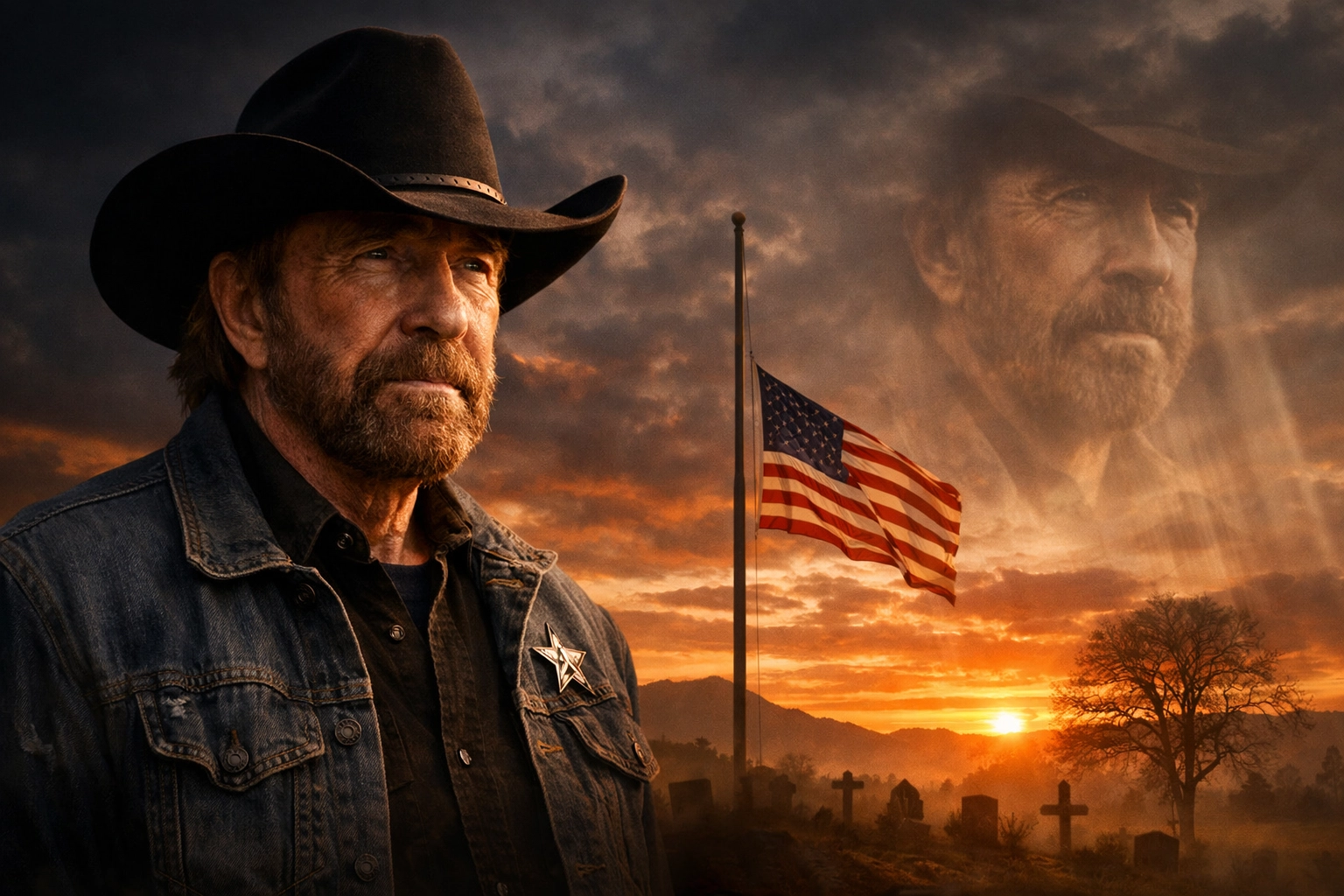
Chuck Norris, 86, Dies. Yes, Really.
Chuck Norris has died at 86.
And yeah, you probably checked twice.
I know I did. In an era where "death hoaxes" are as common as morning coffee, seeing that headline felt like another internet glitch. But this time, the news came from his family on Kauai, and the reality started to sink in.
That’s not because people don’t understand how life works. It’s because for a long time, Chuck Norris stopped feeling like someone who could die. He moved into that weird category where reality and reputation don’t quite line up anymore. He wasn't just an actor or a martial artist; he was a living, breathing hyperbole.
The truth is, he earned it.
Before the Memes, There Was the Man
Before any of the jokes, there was a real career. Serious martial artist. Legitimate champion. Long before he was "Walker" or the subject of a thousand playground rhymes, Carlos Ray "Chuck" Norris was a powerhouse in the world of Tang Soo Do and karate. We’re talking about a man who held the World Professional Middleweight Karate Championship title for six consecutive years.
He didn't just play a tough guy on TV; he was the guy the tough guys looked up to. He broke barriers in the 60s and 70s, a time when martial arts were just starting to permeate the Western consciousness. When he stood next to Bruce Lee in The Way of the Dragon, you didn't feel like you were watching an actor, you felt like you were watching a collision of two forces of nature. He was an actor who didn’t need to overdo anything to hold the screen. He just stood there and you believed him.

I’ve spent a lot of my career in Public Relations, looking at how people build brands and legacies. Most celebrities spend millions trying to manufacture an "authentic" tough-guy image. Chuck didn't have to. His brand was built on the mat, in the sweat and the sparring sessions of the 1960s. By the time he hit the big screen, the foundation was already poured in concrete.
Then the Internet Got Involved
Then the internet got involved. In the mid-2000s, something strange happened. Instead of tearing him down like it usually does to aging stars, the internet did the opposite. It turned him into something bigger. Not in a mean way, not in a mocking way, more like everyone just collectively decided this guy was built differently.
It started with the "Chuck Norris Facts." They were everywhere. At first, you’d see them on message boards, then they migrated to T-shirts, and eventually, they became part of the global lexicon. You know the lines.
- He doesn’t do push-ups, he pushes the Earth down.
- Time waits for no one, except Chuck Norris.
- Death once had a near-Chuck Norris experience.
And the thing is, it worked because it didn’t come out of nowhere. The jokes stuck because there was already something solid there. If the internet had tried to make those jokes about a guy who was just "playing" a hero, they wouldn't have lasted a week. But with Chuck, there was a wink and a nod because we all knew he actually could kick most people’s doors down.

From a PR perspective, this was a masterclass in organic brand evolution. He embraced it. He didn't sue the people making the jokes; he laughed along with them. He understood that the legend was a tribute to the work he’d put in over fifty years. He turned a potential "has-been" status into a permanent seat in the Hall of Cultural Immortality.
The Shock of the Ordinary
So when the headline shows up, “Chuck Norris died,” it doesn’t land clean.
You read it again.
You hesitate.
Part of you expects a correction.
Maybe he just decided to take a nap and the grim reaper was too scared to tell him to wake up. That’s the feeling, right? Because once someone crosses into that larger-than-life space, it’s hard to pull them back into something as ordinary as an obituary. We expect our legends to be static, to stay exactly as they were in our favorite stories.
But this is the real part.
Just eleven days before he passed, on his 86th birthday, he posted a video from his home in Kauai. He was sparring. He looked lean, he looked sharp, and he told his fans, "I don't age. I level up." He was cracking jokes, thanking people for his good health, and still training. That’s the part that hits the hardest. He was "leveling up" right until the end.

He lived a long life. Built something lasting. Left a mark that most people don’t even get close to. That’s the part that matters more than anything else. He wasn't just a meme; he was a husband, a father, and a grandfather. His family’s statement reminded us of that, that behind the roundhouse kicks and the "Walker" badge, there was a man who lived with faith and purpose.
The Legend is Public Property Now
The other part, the legend, the version of him that doesn’t lose, doesn’t age, doesn’t follow the rules, that’s not going anywhere. It can’t. That version doesn’t belong to one person anymore. It belongs to everyone who kept the joke going and somehow turned it into respect.
It belongs to the kid who watches Walker, Texas Ranger reruns with his grandpa. It belongs to the martial artist who is inspired by Chuck’s discipline. It belongs to the millions of people who will still be telling "Chuck Norris Facts" twenty years from now.
In my own journey, whether it's navigating random life hurdles or working on new projects, there's a lesson in how he handled his life. He stayed consistent. He stayed humble. He worked hard when no one was watching, and then he let the world decide what his legacy would be.
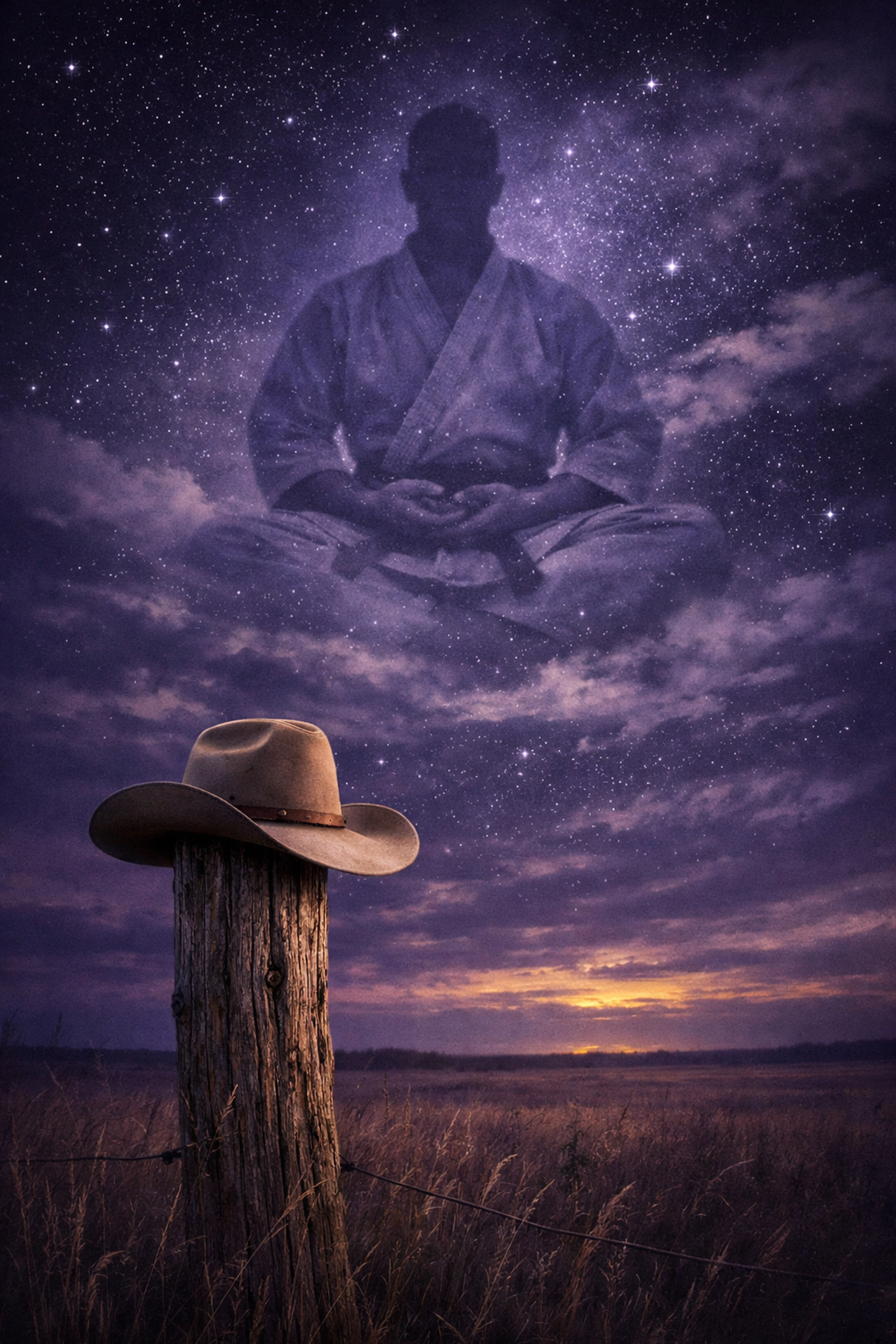
So yes, Chuck Norris is gone.
But not really.
Not in the way that counts.
Because if the last few decades proved anything, it’s this:
Chuck Norris doesn’t disappear.
He just stops showing up.
He has transitioned from the realm of the physical to the realm of the permanent. He is no longer bound by the laws of physics or the ticking of a clock: laws he apparently ignored for the better part of a century anyway.
If you're feeling a bit down about the news, maybe go check out some of his latest news or watch an old clip of him in his prime. There’s something comforting about knowing that while the man may have passed, the spirit of the guy who "pushed the Earth down" is firmly rooted in our culture.
Rest in peace, Chuck. You didn't just live a life; you became a language. And for that, the world is a lot more interesting.
For more updates and personal reflections, feel free to browse through the post archive or check out some of my other photos from my recent travels. Life moves fast, but legends tend to stick around.
Welcome to WordPress. This is your first post. Edit or delete it, then start writing!


Chuck Norris, 86, Dies. Yes, Really.

The Ultimate Guide to Canadianism: How the Five Pillars Can Rebuild Our Shared National Home

Quebec Saves the Music Industry


-
 Music3 months ago
Quebec Saves the Music Industry
-

 Food3 months ago
The chicken marsala.
-
 Stories3 months ago
Waiting for the Bandit
-

 Music3 months ago
Alex Van Halen Working on New Album Built From Eddie Van Halen’s Unreleased Recordings
-

 Music3 months ago
My Experience With Suno and AI Music
-
 Random3 months ago
What Am I?
-

 Food3 months ago
Nina and Ella’s Family Cheesecake
-

 Music3 months ago
The Architects of Rock Guitar