Music
Alex Van Halen Working on New Album Built From Eddie Van Halen’s Unreleased Recordings


Alex Van Halen Working on New Album Built From Eddie Van Halen’s Unreleased Recordings
Drummer is reviewing the band’s archive with Steve Lukather to potentially finish and release previously unheard material recorded before Eddie Van Halen’s death.
Van Halen fans may soon hear new music from the band’s archives. Alex Van Halen has confirmed that he is working on a project built from previously unreleased recordings made with his late brother, Eddie Van Halen.
The drummer has begun reviewing a large collection of studio recordings Eddie left behind before his death in October 2020. Many of the recordings date from the band’s later years but were never completed or released.
To help sort through and potentially finish the material, Alex has enlisted guitarist Steve Lukather, the longtime Toto guitarist and close friend of Eddie Van Halen.
According to Lukather, the project centers on preserving Eddie’s existing recordings rather than attempting to recreate Van Halen without him.
“There are recordings,” Lukather said in a recent interview. “Al asked me to help him go through everything Eddie recorded. There’s a lot of material.”
Eddie Van Halen was known for constantly recording ideas in his studio, 5150 Studios in Los Angeles. Over the decades he captured riffs, demos, and partially completed songs, many of which were never released.
Since Eddie’s passing, fans have long speculated about whether those recordings might eventually be released.
Alex Van Halen has now confirmed that he is carefully reviewing the archive to determine what can realistically be finished and shared with the public.
The involvement of Lukather is notable given the long friendship between the two guitarists. Eddie and Lukather had known each other for decades and shared a deep musical respect.
Lukather has been clear that his role is limited to helping organize and complete the recordings where appropriate.
“He’s not trying to replace Ed,” Lukather said. “Nobody could ever do that.”
Instead, the project appears focused on using Eddie’s original guitar tracks and building finished recordings around them where possible.
Van Halen released its final studio album, A Different Kind of Truth, in 2012. The record reunited the band with original singer David Lee Roth and featured Eddie Van Halen alongside Alex Van Halen and Eddie’s son Wolfgang on bass.
Following Eddie’s death in 2020 after a long battle with cancer, the future of Van Halen’s recorded legacy has remained uncertain. You can find more updates on the latest celebrity news on my blog.
Wolfgang Van Halen has since focused on his own band, Mammoth WVH, while Alex Van Halen has largely stayed out of the public spotlight.
The possibility of new Van Halen material emerging from the archives has therefore generated strong interest among fans and the wider rock community.
No release date or formal project title has been announced.
Alex Van Halen has indicated that the process will take time as he carefully reviews the large amount of material Eddie recorded over the years.
If completed, the project could offer fans a rare opportunity to hear previously unheard performances from one of the most influential guitarists in rock history.

Music
Quebec Saves the Music Industry
I watched this video from Angine de Poitrine the other day. They’re out of Saguenay, Lac-Saint-Jean.
I hit play not expecting much, and within about thirty seconds I’m just sitting there going, what the hell is this?
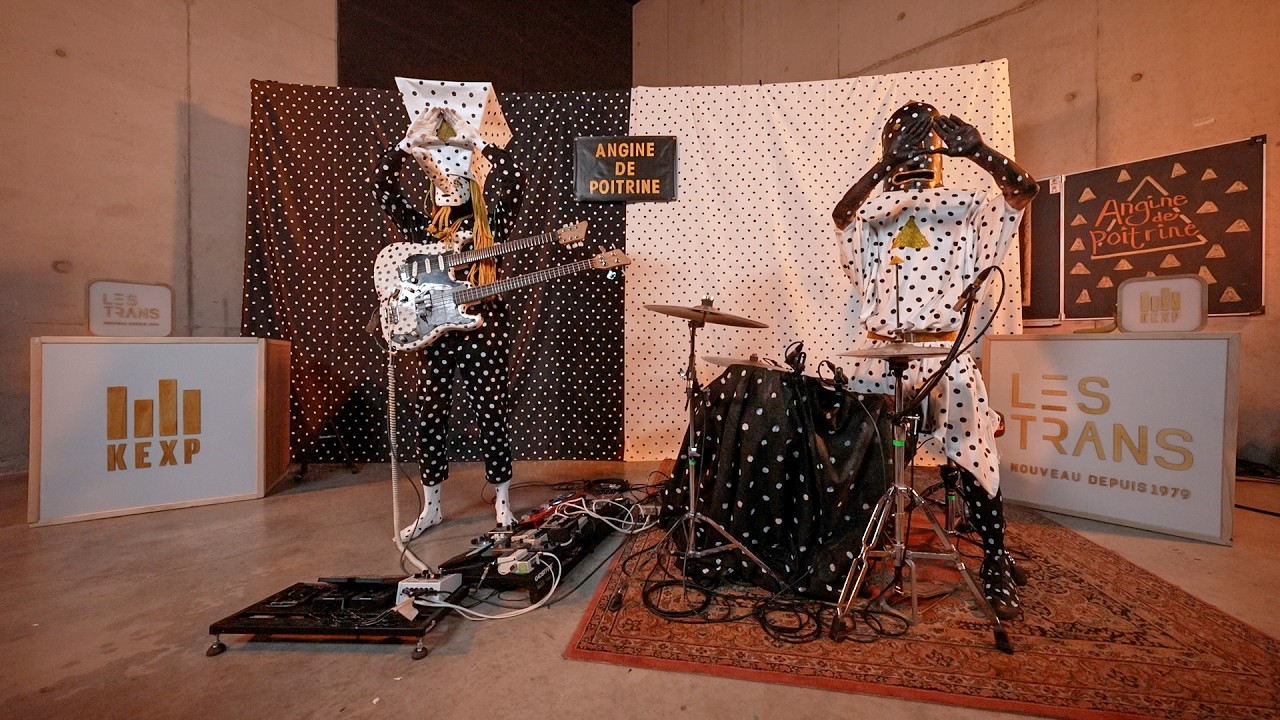
I watched this video from Angine de Poitrine the other day. They’re out of Saguenay, Lac-Saint-Jean.
I hit play not expecting much, and within about thirty seconds I’m just sitting there going, what the hell is this?
And then it ends, and I’m not even kidding, I just sat there for a second thinking, I’m supposed to just go on with my life?
Like… that’s it? I just go make a coffee now? Scroll Instagram? After whatever that was?
So I try to look them up.
Nothing. No real names, no clean little bio, no story packaged up for me. I’ve got a video sitting at around four million views in a month and I still don’t know who these people are.
That honestly makes it better.
Because everything else right now is so dialed in. Everything’s clean, everything’s tight, everything’s built to hold your attention just long enough.
And most of it you forget immediately.
This thing, whatever it is, sticks. Even if you don’t like it, it sticks. There’s no version of you going, yeah that sounds like ten other songs I heard this week. There’s nothing to compare it to.
And it’s coming out of Saguenay. Not LA, not New York, not some industry machine.
Just… there.
That’s the part that got me.
It feels like nobody stepped in and said, maybe tone this down, maybe make it more accessible, maybe think about where this fits.
They just went all the way with it.
And somehow, four million people followed them there.
I’m not even saying it’s good in the traditional sense. I don’t even know what box you’d put it in.
I just know I watched it, and it didn’t leave my head.
And right now, that’s rare.

When I first noticed the Suno app showing up last year, I assumed it was just a novelty. You’d see people talking into their phones and suddenly a little custom song would appear. It looked like something people would play with for five minutes and then forget about.
Then I opened Suno Studio.
That’s when I realized it wasn’t a toy.
Once I started experimenting with it, I could hear immediately that it was capable of producing music that actually sounded good. My first reaction was probably the same one a lot of musicians had when they first saw what this thing could do. For a moment you think, “Well, that’s it. The music industry is finished.”
A lot of musicians are having a hard time with this technology, and honestly I understand why. I’m sure a guy like my friend Dimo probably has strong feelings about it too. I don’t even have to ask him. I’ve played with Dimo professionally over the years and he still plays all over the Montreal area. He takes the craft seriously, works hard on his songs, and he’s a very good singer. Musicians like him put a lot of pride into the work.
And that’s exactly why tools like this make people nervous.
But once the initial shock wore off for me, curiosity took over.
I’ve been around music most of my life. For about ten years I owned a music school and played professionally all over the place. Outside of that stretch, most of my musical life has been writing songs, recording demos, and playing with friends. When you do that long enough, you accumulate a lot of material.
In my case it’s about thirty years’ worth.
Songs, ideas, fragments, old demos sitting around on drives and tapes and folders that never really went anywhere.
So like a lot of people experimenting with Suno, I started feeding some of those demos and song ideas into it just to see what would come out the other end.
Now before anyone jumps to conclusions, it’s important to say this clearly. These are my songs. The lyrics are mine, the melodies are mine, the chord structures and styles are mine. Some of these pieces were already complete demos from years ago. Others were unfinished when I started working with them again.
Honestly, one of the biggest challenges when I started showing some of this to people was simply getting them to take it seriously. The first reaction is usually a shrug and a joke, like I just pulled the arm on a one-armed bandit and waited to see what mystery prize the machine spit out. But that’s not what I was doing with Suno at all. Yes, you can use it that way if you want to, but that wasn’t my process. The moment you say the words “AI music,” people tend to roll their eyes and dismiss it.
Which is funny when you think about it.
For years everyone talked about how artificial intelligence was coming and how it would change everything. Now it’s finally here and the instinct is to wave it off and pretend it has no value.
In my case, when I explain what I’m doing, people say, “Yeah, yeah, it’s all AI.” But it isn’t. AI isn’t writing my songs. It’s not inventing the melodies or the lyrics. If anything, it’s acting more like my cover band, playing the material I bring to the table.
Sometimes I only had a verse and a chorus, so I finished writing the rest before running it through Suno. Other times I would generate an arrangement first and then go back afterward and complete the lyrics once I heard where the music was going.
And sometimes the process started even more simply. I’d pick up my phone and sing a rough melody into it, sometimes barely more than humming through the idea just to capture it. Suno Studio is surprisingly good at interpreting that kind of input. You can sing or even mumble a musical line and it will turn that into instruments inside the arrangement.
In a strange way it feels like skipping the keyboard interface entirely and going straight from your brain into the track.
What the whole process started to feel like wasn’t replacing musicians so much as stepping into the role of a producer. Suddenly it felt like every session player in the world was sitting there waiting for instructions. You imagine a bass line and ask for it, and thirty seconds later it’s there. If the guitar needs to lean harder into the rhythm, you adjust it and it responds immediately.
The closest comparison I can think of is those stories about Brian Wilson working with the Wrecking Crew in the sixties. I’m obviously not comparing myself to Brian Wilson, but the feeling of shaping arrangements that quickly gives you a glimpse of what that must have been like.
And I have to admit something.
My songs have never sounded this good.
At the same time, I don’t believe tools like this are going to replace real artists anytime soon. People who operate at the very top of the industry, like my longtime friend Serban Ghenea, are doing something very different. That world is about real artists, real performances, and the craft of shaping a record in ways an algorithm can only imitate.
Artificial intelligence can learn patterns and recreate styles, but it doesn’t originate culture. New ideas still come from people.
Which probably means the future isn’t humans versus AI at all. It’s more likely that the two end up working in tandem.
For someone like me, with thirty years of songs sitting in drawers and hard drives, it’s turned into a surprisingly fun way to bring some of those ideas back to life.
Below I’ll include a few links so you can hear what came out of these experiments.
Just keep in mind that most of these tracks started life as rough demos and fragments written over the last three decades.
I simply ran them through Suno to see what would happen.
And this is what we got.
One thing I will say though, the shine eventually wears off.
When I first discovered Suno I was completely fascinated by it. I spent a lot of time experimenting, running old demos through it, seeing what would happen. But like any new technology, after a while it stops being the shiny object on the table.
These days I still use it occasionally when I’m working on something online, but the big rush of experimentation is mostly over. I’ve already gone through the pile of demos and ideas I had sitting around for thirty years, and in many ways that was the whole point.
What I ended up with is something I never really had before, a collection of songs from different periods of my life that finally sound the way I always imagined they might.
And honestly, that alone made the whole exercise worthwhile.
Here’s a link to some of the stuff I did. I’d love to hear what you all think. Feel free to comment here, not just about the music itself, but about AI in general. What are your thoughts on it? And if you listen to the tracks, do you have a favourite?
Links:
Dimo James
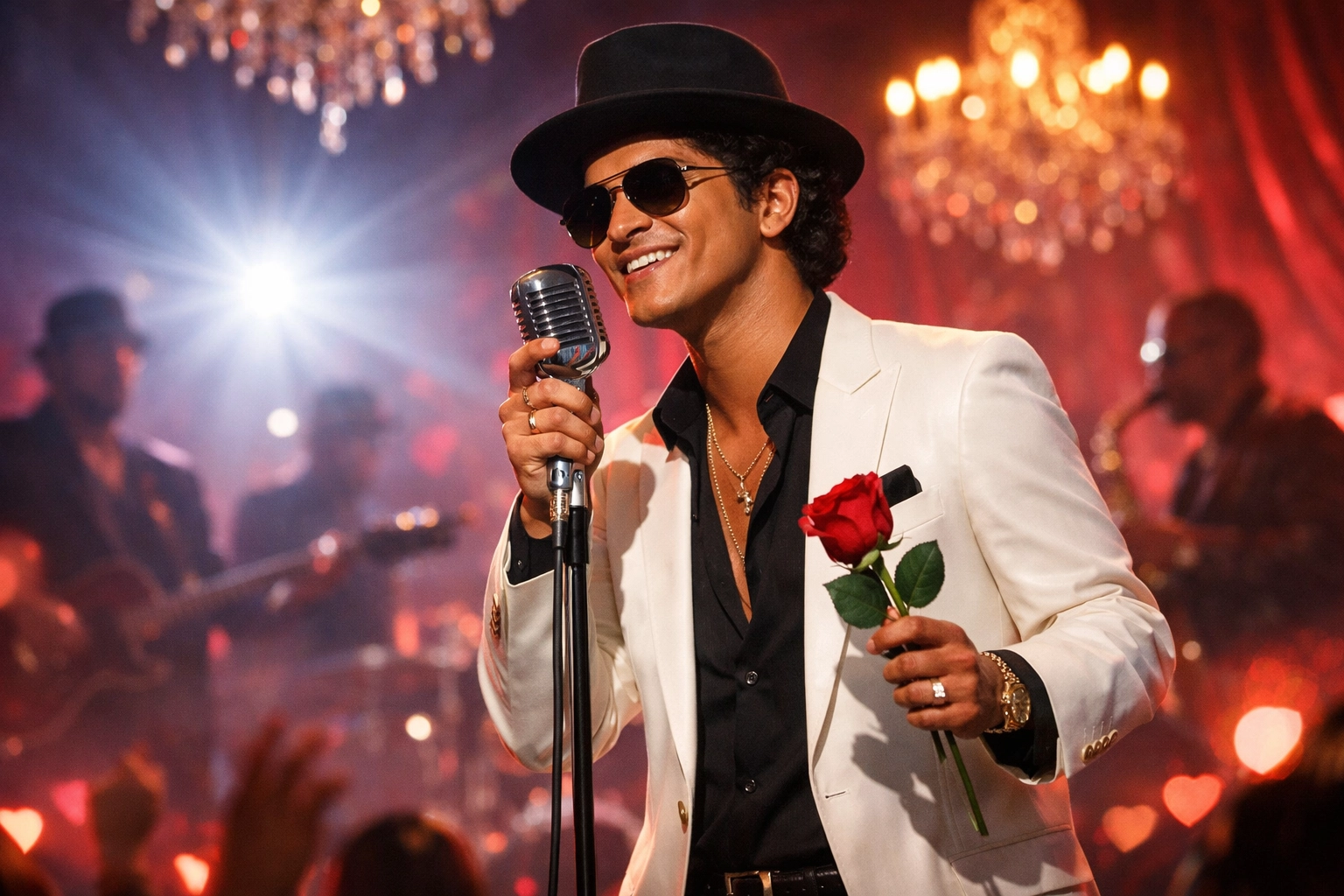
Bruno Mars’ new album The Romantic debuted at No. 1 on the Billboard 200 for the week ending March 14, 2026.
The album earned 186,000 equivalent album units in its first week, made up of 93,500 traditional album sales and 90,500 units from streaming.
It is Mars’ first-ever No. 1 debut on the Billboard 200 and his first chart-topping album in 13 years.
The lead single “I Just Might” also debuted at No. 1 on the Billboard Hot 100.
The Long Road to 'The Romantic'
To understand why this No. 1 debut is such a significant headline, we have to look at the timeline. Before the release of The Romantic on February 27, 2026, it had been over nine years since Bruno Mars released a solo studio album. His last solo effort, 24K Magic, arrived in late 2016. While he certainly wasn't idle in the interim: most notably sweeping the Grammys with Anderson .Paak as Silk Sonic: the industry has changed immensely in that nearly ten-year gap.
The music landscape in 2026 is driven by rapid-fire content and viral moments. Many artists feel pressured to release new music every 12 to 18 months to stay relevant in the algorithm. Bruno Mars took the opposite approach. By waiting, he created a vacuum that only he could fill. When The Romantic finally dropped, it wasn't just another Friday release; it was an event.

Breaking Down the Numbers
The data behind the debut confirms the hype. The Romantic claimed the top spot on the charts with impressive consumption units, fueled heavily by both traditional sales and massive streaming numbers. While many modern pop albums rely exclusively on "playlist padding": releasing 20+ tracks to juice streaming totals: Mars went against the grain.
The album is surprisingly lean, consisting of just 9 songs with a total runtime of 31 minutes. In an era where "more is more" is the standard PR strategy for chart dominance, Mars proved that "better is more." Each of the nine tracks feels intentional, polished, and essential to the album's narrative.
The lead single, "I Just Might," set the stage early. Released at the beginning of the year, the track debuted at No. 1 on the Billboard Hot 100 on January 9, 2026. It served as a perfect primer for the album’s sound: a sophisticated blend of nostalgia and modern production. By the time the full album arrived in late February, the momentum was unstoppable.
A Masterclass in Genre Blending
One of the most factual ways to describe The Romantic is as a curated tour of 20th-century musical styles, reimagined for 2026. Mars has always been a student of music history, but this album dives deeper into specific niches than he has in the past.
According to industry reports and the album’s liner notes, the project features a heavy influence of:
- Cha-cha and Bossa Nova: Giving the record a rhythmic, international flair that feels distinct from the heavy synth-pop dominating the charts lately.
- Funk and New Jack Swing: A return to the high-energy, danceable roots that made 24K Magic a household staple.
- Soul Balladry: Stripped-back moments that highlight his vocal range without the distraction of heavy electronic layering.
To achieve this sound, Mars reunited with his long-time stable of elite collaborators. The production credits read like a "who’s who" of modern hitmakers, including Brody Brown, Philip Lawrence, James Fauntleroy, and D'Mile. These are the architects of the "Bruno sound," and their work on The Romantic is precise and expertly mixed. For those interested in the technical side of how these sounds are built, checking out some of our Gutenberg blocks on the site can sometimes feel like building a song: layer by layer, piece by piece.

The Public Relations Perspective
From a PR standpoint, the rollout of The Romantic was a study in controlled narrative. At Christopher M. Michaud, we often discuss the importance of brand consistency. Bruno Mars' brand is built on excellence and "cool." He rarely grants long-form interviews and stays relatively quiet on social media compared to his peers. This creates an air of mystery.
The "no spin" reality of this release is that Mars doesn't need to manufacture drama to sell records. The quality of the live performance and the record itself are the primary marketing tools. Instead of a barrage of TikTok stunts, the team focused on the "event" nature of the release. The announcement of The Romantic Tour: a massive 71-show stadium run: arriving alongside the album helped solidify the idea that Bruno is back to claim his crown as the premier live entertainer of his generation.
Taking it to the Stadiums
A No. 1 album is one thing, but the true test of an artist's longevity in 2026 is the ability to move tickets. The Romantic Tour is scheduled to kick off on April 10, 2026, in Las Vegas. From there, it will travel through 71 stadiums across North America and beyond, eventually wrapping up in Vancouver on October 14, 2026.
This tour is significant not just for its scale, but for what it represents for the live music industry. As we see more artists move toward smaller, more frequent "residencies," Mars is doubling down on the massive, old-school stadium spectacle. It is a high-risk, high-reward strategy that only a handful of artists (the Taylor Swifts and Beyoncés of the world) can successfully navigate. Given the No. 1 debut of the album, the demand for these tickets is already exceeding supply.

Final Thoughts on the Return
Watching the success of The Romantic has been a highlight of the year so far. In my work, whether I’m looking at business trends or lifestyle shifts, I’m always drawn to stories of craftsmanship. Bruno Mars isn’t just a pop star; he is a craftsman.
The album’s debut at the top of the charts isn't a fluke of marketing or a result of a slow release week. It is the result of a nine-year hiatus spent perfecting a specific sound and waiting for the right moment to re-engage with the public. In a world that often feels like it's moving too fast, The Romantic is a 31-minute reminder that some things are worth the wait.
If you are looking to learn more about what we do here or want to see more of our work, feel free to visit the about us page or reach out via our contact section. We’re always keeping an eye on the latest in music, PR, and the stories that shape our culture.
For now, I’ll be keeping "I Just Might" on repeat and keeping an eye on how the rest of the album tracks perform as we head into the summer tour season. It’s a good time to be a music fan.



Chuck Norris, 86, Dies. Yes, Really.

The Ultimate Guide to Canadianism: How the Five Pillars Can Rebuild Our Shared National Home

Quebec Saves the Music Industry


-
 Music1 month ago
Quebec Saves the Music Industry
-

 Food1 month ago
The chicken marsala.
-
 Uncategorized1 month ago
The Ultimate Guide to Canadianism: How the Five Pillars Can Rebuild Our Shared National Home
-

 Music2 months ago
My Experience With Suno and AI Music
-

 Random2 months ago
What Am I?
-

 Food1 month ago
Nina and Ella’s Family Cheesecake
-
 Music2 months ago
Bruno Mars Returns: ‘The Romantic’ Debuts at No. 1
-
 Uncategorized1 month ago
Chuck Norris, 86, Dies. Yes, Really.